Best Tango Classes and Workshops in Buenos Aires
Compare the best Buenos Aires tango classes and workshops for beginners, including group lessons, private teachers, milonga nights and show-plus-lesson packages.
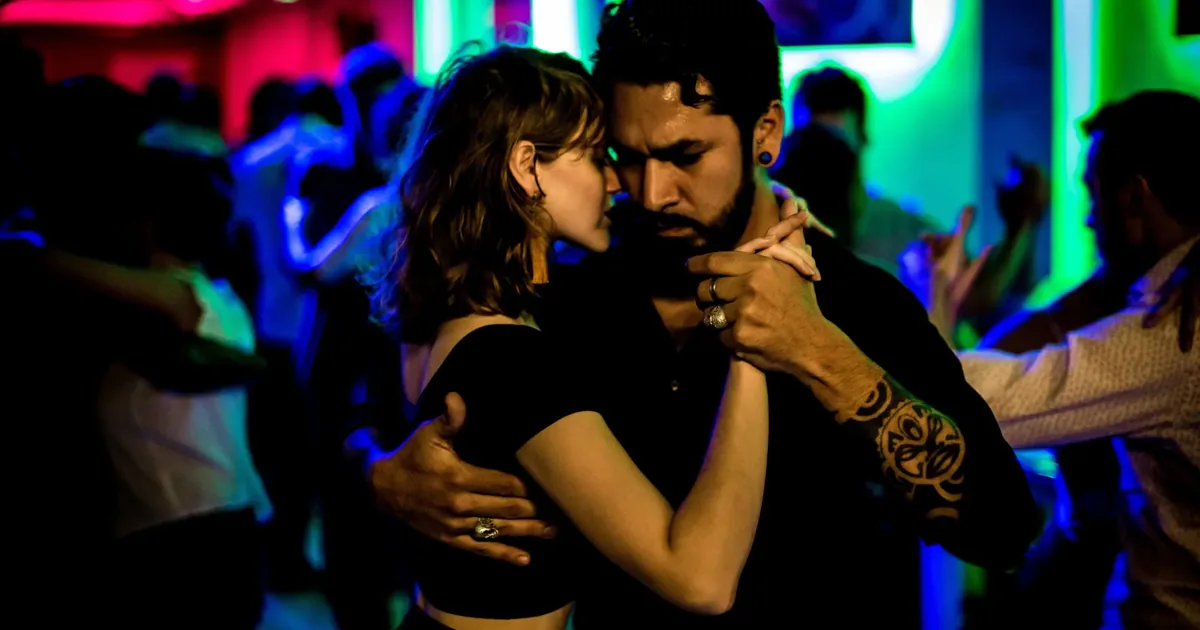
Taking a tango class in Buenos Aires can be more memorable than watching a show. You begin to understand why the dance looks so controlled, how two people communicate without speaking, and why social tango is built around walking and musical connection instead of dramatic stage tricks.
You do not need previous dance experience, specialist shoes or a partner. Buenos Aires has beginner group classes, private teachers, lessons before milongas and short workshops attached to dinner shows. The challenge is choosing a format that matches what you want. If you have only an hour or two, the simplest start is a private 60-minute tango lesson with a professional Buenos Aires dancer, $39 and rated 4.9 from more than 300 reviews; you can check dates below.
Check Availability
For most first-time visitors:
- Choose La Viruta for an approachable group class followed by social dancing.
- Choose Escuela Mundial de Tango for a structured timetable and serious study.
- Choose La Catedral Club for a relaxed, bohemian evening.
- Book a private lesson when you have limited time or want English-language attention.
- Book a lesson-and-milonga experience when understanding local tango culture matters as much as learning steps.
This guide compares the main options, explains prices and etiquette, and helps complete beginners avoid paying for the wrong type of “tango workshop”.
Best Buenos Aires tango classes at a glance
| Option | Best for | Partner needed? | Typical commitment |
|---|---|---|---|
| La Viruta Tango Club | First group class and social atmosphere | No | One class plus optional milonga |
| Escuela Mundial de Tango | Structured study and multiple class levels | No | Drop-in class to multi-day programme |
| La Catedral Club | Informal, alternative night out | No | Class plus relaxed dancing |
| El Beso | Traditional salon culture | No, but experience helps | Class followed by milonga |
| Private tango lesson | Fast progress and individual feedback | No | Usually 60–90 minutes |
| Guided lesson and milonga | First social tango night | No | Approximately 3–5 hours |
| Dinner show with lesson | Entertainment with a short activity | Usually no | Full evening |
| Outdoor/community class | Low-cost introduction | No | Around one hour |
Schedules and teachers change frequently. Always verify the current class level, language and start time before travelling.
What type of tango class should you book?
Group class
A group class is the most affordable way to try tango. Teachers demonstrate movements while students practise together, often rotating partners.
Best for:
- Sociable travellers
- Complete beginners who want a low-cost introduction
- Solo visitors
- Anyone planning to stay for a milonga afterwards
The limitation is individual attention. A class described as “all levels” may move too quickly for a nervous first-timer or too slowly for an experienced dancer.
Private lesson
A private lesson is tailored to your body, experience and goals. The teacher can correct posture, balance and connection immediately instead of watching a room of students.
Best for:
- Travellers with only one or two free hours
- Couples wanting to learn together
- Students uncomfortable in a large class
- Dancers refining a specific technical issue
- Visitors who need a teacher fluent in English
Private classes cost more but usually deliver more useful feedback per minute.
Class before a milonga
Many social tango events teach a class before the main dancing begins. This is the best bridge between learning and seeing how tango works in real life.
Best for:
- Visitors interested in tango culture
- Beginners willing to stay late
- Solo travellers
- People who want to practise immediately
The class may focus on that evening’s crowd and not follow a complete beginner curriculum. Check the stated level.
Tango workshop or seminar
In Buenos Aires, a workshop often addresses a specific topic such as musicality, close embrace, turns, milonga rhythm, tango vals or follower technique. It may last longer than a regular class or form part of a weekend intensive.
Best for:
- Dancers who already know the fundamentals
- Visitors studying for several days
- Students interested in a named teacher or theme
A specialist seminar is rarely the best first-ever lesson unless it explicitly welcomes complete beginners.
Show-plus-lesson package
Some tango houses add a short group class before dinner and the performance. It is light, social and designed for visitors.
Best for:
- Couples seeking a fun holiday activity
- Families with teenagers
- Groups who want to be entertained rather than taught
- Travellers already planning to attend the show
Do not expect deep instruction. The lesson is an icebreaker, not a substitute for a proper class.
Best places to learn tango in Buenos Aires
1. La Viruta Tango Club: best first group class
Address: Armenia 1366, Palermo Best for: Complete beginners, solo travellers and a class-to-milonga evening
La Viruta is one of the most accessible entry points into Buenos Aires tango. Founded in 1994 inside the Armenian Cultural Centre, it operates as a school, milonga and meeting place for local and international dancers. Current programming includes several levels, bilingual teachers and live music on selected nights.
The main advantage is atmosphere. Beginners are not entering a silent studio where every mistake feels visible. They join a busy cultural venue where many other students are also learning. After class, they can stay to watch or join the social dance.
Choose La Viruta if:
- This is your first tango class.
- You are attending alone.
- You want to meet other travellers and dancers.
- You prefer casual clothing and an energetic room.
- You want a milonga immediately after the lesson.
Check the daily programme carefully. La Viruta also teaches and hosts other social dances, and the beginner tango class may not occur at the same time every night.
Earlier sessions are generally easier for beginners. The level and confidence on the floor rise later in the night. Our guide to the best tango bars and milongas covers what the milonga after class is like.
2. Escuela Mundial de Tango: best for structured learning
Address: Florida 656, first floor, microcentro Best for: Multiple classes, technique and visitors treating tango as a serious part of the trip
Escuela Mundial de Tango offers a broad timetable covering Argentine tango, milonga, vals, technique and specialist themes. It works more like a dedicated school than a one-night attraction, with regular group classes from 11am to 10pm on weekdays, Saturday classes from 11am, private lessons and weekend seminars.
This is the strongest choice when you want:
- More than one lesson
- Clear beginner, intermediate and advanced levels
- Technique classes
- Different teachers and perspectives
- Daytime as well as evening possibilities
- A short intensive or multi-day plan
Look for classes marked principiantes for beginners. Morning or quieter sessions may provide more individual attention than the busiest evening classes.
The school suits serious beginners as well as experienced dancers. A visitor staying for a week could combine foundational classes, a technique session and a lesson on milonga or vals.
3. La Catedral Club: best bohemian class
Address: Sarmiento 4006, Almagro Best for: Travellers who dislike a formal dance-school atmosphere
La Catedral Club occupies a high-roofed, art-filled space with mismatched furniture and an alternative cultural feel. Its current programme lists tango classes from Tuesday to Saturday, with sessions beginning in the early evening and later activity in the main hall.
The atmosphere is much less formal than a traditional salon. You can take a class, order food or a drink, watch others dance and stay as long as the night remains enjoyable.
Choose La Catedral if:
- You want a class as part of a relaxed night out.
- You prefer creative, unconventional spaces.
- Your companion does not want to dance.
- You are comfortable with a venue that feels organic and unpolished.
- Vegetarian food is useful to your group.
The exact teaching level can vary. Confirm which session is intended for beginners; do not assume every class starts from zero.
4. El Beso: best for traditional milonga culture
Address: Riobamba 416, Balvanera Best for: Beginners who want to understand classic social-tango customs
El Beso is a respected compact salon hosting classes and milongas throughout the week. Different organisers run different events, so the schedule, teachers and crowd change by day.
This is a more traditional environment than La Viruta or La Catedral. Students can observe the cabeceo invitation system, tandas, cortinas and the careful floorcraft used by experienced social dancers.
Choose El Beso when:
- You already know a few basic steps.
- You want to learn milonga etiquette as well as movement.
- Traditional tango music interests you.
- You prefer an intimate room.
- You plan to stay for the social dance.
Complete beginners are welcome at appropriately labelled classes, but the later milonga may feel more intimidating. Take time to watch before joining a busy floor.
5. A private tango lesson: best for limited time
Buenos Aires has many professional teachers offering one-to-one or one-couple lessons in studios across the city. The private tango lesson we feature is a 60-minute class for all levels, taught by a professional milonga dancer in a studio chosen to be as close to your hotel as availability allows; it costs $39 and is rated 4.9 from more than 300 reviews. A second option, the private Argentine tango lesson with an individual teacher, is $40 and rated 5.0 from more than 30 reviews, and can be held in the teacher’s mirrored studio or at your accommodation.
A good beginner private lesson should cover:
- Posture and balance
- The tango walk
- Leader and follower communication
- Musical rhythm
- Weight changes
- Simple direction changes
- How to enter and leave an embrace comfortably
It should not rush to teach a long memorised sequence. Social tango is improvised, and the first skill is connection; collecting figures comes later.
Choose a private class when:
- You have only one day in Buenos Aires.
- You need teaching in a particular language.
- You are learning as a couple.
- One partner has more experience than the other.
- You have mobility, hearing or sensory needs.
- You want confidence before attending a milonga.
Ask whether the quoted price is per person, per couple or per instructor hour. Our breakdown of the private lesson listing explains how the studio is assigned and why the map pin on the listing is only a placeholder.
6. Private lesson plus guided milonga: best cultural immersion
A guided milonga experience normally begins with a private or small-group lesson, then continues to a social dance with a local host. Some packages include hotel pickup, admission and a drink.
The small-group tango night with a lesson and transfers is the best-reviewed version on GetYourGuide: $98 per person, rated 4.8 from almost 100 reviews, with pickup from hotels in Recoleta, Retiro, San Nicolás, Monserrat, San Telmo and Palermo, a lesson, a professional dancer as your guide and one drink at the milonga. The same operator’s private tango milonga night with a lesson and transfers is $140 per person, rated 4.5 from a smaller pool of 14 reviews, and keeps the one-hour lesson private to your group.
This solves several problems for first-time visitors:
- Choosing an appropriate milonga
- Understanding the entrance and seating system
- Learning the cabeceo
- Knowing when to dance and when to leave the floor
- Arranging late-night transport
- Communicating when English is limited
It is more expensive than turning up independently, but the guide provides context that a basic group class cannot.
Choose it if your real goal is to understand why tango remains a social culture in Buenos Aires, and not only to learn three steps.
7. Dinner show with tango lesson: best entertainment package
Several tango houses sell a lesson with the evening. The Rojo Tango dinner, show and tango lesson package at the Faena Hotel is the most polished version: a private lesson with members of the Rojo Tango cast inside the cabaret, then front-row seats, a three-course dinner, premium drinks and private hotel transfers, from $500 per person and rated 4.7 from more than 150 reviews. La Ventana sells its show with a tango class as an add-on, Tango Porteño offers a package with a class taught by cast members before dinner and the show, and some Piazzolla Tango packages include a short group lesson through selected sellers.
The class is designed to be enjoyable for visitors. It can be a good addition if you already want the dinner show, but it offers less correction and practice than a studio lesson.
Choose it for:
- A honeymoon or couple’s activity
- A family celebration
- A group with mixed interest in dancing
- A complete evening with no separate planning
Skip it when technical progress is the goal or when the early start makes the dinner-show evening too long. Our guide to whether the dinner package is worth it weighs the dinner side of these packages, and our Piazzolla Tango review explains what a lesson adds to that evening.
8. Outdoor and community tango classes: best low-cost option
Buenos Aires occasionally offers free or contribution-based classes in public spaces and cultural centres. La Glorieta de Belgrano is a well-known outdoor dance location, while city programmes and neighbourhood events can add temporary workshops.
These sessions are friendly and inexpensive, but schedules depend on the weather, the season and the organisers. Verify the class on the day and bring cash for a contribution where appropriate.
They are best for travellers who value atmosphere and spontaneity more than a tightly structured curriculum.
Group class vs private lesson
| Consideration | Group class | Private lesson |
|---|---|---|
| Cost | Lower | Higher |
| Personal correction | Limited | Extensive |
| Social atmosphere | Strong | Minimal |
| Flexible timing | Low | High |
| Partner rotation | Common | Not needed |
| Language choice | Varies | Can be requested |
| Best for one-time fun | Excellent | Good |
| Best for rapid improvement | Moderate | Excellent |
| Milonga connection | Strong at dance venues | Depends on teacher/package |
For a complete beginner staying several days, the best combination is one private lesson followed by two or three group classes. The private class establishes safe fundamentals; the group sessions develop adaptability and confidence with different partners.
Do you need a partner?
No. Many classes welcome solo students and rotate partners.
Ask about the policy before booking because formats differ:
- Some classes rotate everyone.
- Some allow couples to remain together.
- Some balance leader and follower numbers through advance registration.
- Private lessons can provide an instructor as your partner.
- Open-role classes encourage students to learn either or both roles.
If travelling as a couple, rotating partners can improve learning because each person experiences different feedback. If either partner is uncomfortable with rotation, tell the teacher before class.
Leader, follower and open role
Traditional tango classes often describe roles as leader and follower instead of man and woman. Anyone can learn either role.
The leader proposes direction, timing and movement through the embrace. The follower responds actively while maintaining balance and contributing to the shared dance. Neither role is passive.
If you are unsure, try the role that feels most interesting. Learning both can improve understanding. Queer and open-role tango communities are active in Buenos Aires, and specialist classes or milongas may be available during your visit.
What happens in a beginner tango class?
A well-designed first lesson commonly includes:
- Finding stable upright posture
- Transferring weight from one foot to the other
- Walking alone to the music
- Creating a comfortable open embrace
- Communicating direction through the torso
- Walking with a partner
- Pausing and changing direction
- Navigating safely around the floor
Teachers may add a basic turn or salida, but the aim is not to reproduce an acrobatic stage routine.
Do not worry if you spend much of the class walking. Argentine tango dancers spend years refining the walk because it contains balance, musicality and connection.
Tango, milonga and vals: what is the difference?
Buenos Aires social dances normally rotate among three related forms:
- Tango: varied speed and mood, commonly danced with deliberate walking and pauses.
- Milonga: quicker and more rhythmically playful.
- Tango vals: danced to a flowing three-beat pulse related to the waltz.
Complete beginners should start with tango. Take a milonga or vals workshop after learning basic connection, walking and floor navigation.
How much do tango classes cost?
Prices move quickly in Argentina, so exact peso figures become outdated. A useful planning structure is:
- Community or contribution class: free to a modest donation
- Group class at a school or milonga: generally the lowest paid option
- Private lesson: often priced around a comparable guided activity or premium tour hour; the two private lessons above are $39 and $40
- Lesson and milonga experience: higher because it can include hosting, admission, transport and several hours of guidance; $98 to $140 per person for the two guided nights above
- Dinner show with lesson: priced as a complete evening, including food and performance; the Rojo Tango package is $500 per person
Current private products can vary from moderate studio rates to premium visitor packages. Ask what is included before comparing:
- Studio rental
- One or two instructors
- Price per person or per booking
- Transport
- Milonga admission
- Drinks
- Cancellation terms
Paying more for a famous teacher is only worthwhile when their style and level suit you.
How many lessons should you take?
One lesson
Enough to understand the embrace, the walk and basic communication. Best as a cultural holiday activity.
Two or three lessons
Enough to reinforce fundamentals, correct initial habits and feel less lost at a beginner-friendly práctica.
One week of classes
A meaningful introduction when lessons are combined with observation, practice and rest. Avoid taking so many classes that your body and attention cannot absorb them.
Intensive study
Best for existing dancers. Private lessons, technique classes, seminars and nightly milongas can be physically demanding. Schedule recovery time and keep notes or short practice videos with the teacher’s permission.
What should you wear?
For class, wear comfortable clothes that allow natural movement. You do not need the formal outfits seen on a show stage.
Good choices include:
- Trousers, leggings, a skirt or a dress that does not restrict steps
- A breathable shirt or top
- Secure, comfortable shoes
- An extra layer for air-conditioned studios
Avoid:
- Flip-flops
- Loose backless shoes
- Heavy boots
- Very sticky rubber soles
- Extremely high heels if you do not already dance in them
A smooth sole helps with pivots. Beginners can use ordinary clean shoes with a stable heel. Specialist tango shoes become useful only if you plan to continue. For the show afterwards, our what-to-wear guide covers the venues’ expectations.
Do classes teach stage tango or social tango?
Most beginner schools and milonga classes teach social tango: compact, improvised movement designed for a shared floor.
Stage tango includes larger movements, lifts and choreography for an audience. It requires space, specialist technique and often an established partnership.
If a holiday listing uses photographs of dramatic kicks, ask what the actual lesson teaches. A responsible first class will focus on safe fundamentals, not imitation acrobatics. Our guide to what to expect at a tango show describes the stage version you will see in the evening.
How to choose a good teacher
Look for someone who:
- Asks about your experience and goals
- Can explain concepts in a language you understand
- Teaches connection and movement as well as sequences
- Gives corrections without causing pain or embarrassment
- Respects boundaries in the embrace
- Adapts for injuries and mobility needs
- Understands social-floor etiquette
- States prices and cancellation terms clearly
Fame and competition titles do not automatically make someone the best teacher for a nervous beginner. Patience, observation and communication matter more.
Booking tips
- Confirm that the class welcomes complete beginners; “all levels” is not the same thing.
- Check that tango is the dance on the timetable that day; La Viruta and others also teach salsa and rock.
- Ask if teaching is available in English.
- Confirm whether partner rotation is expected.
- Find out if milonga admission is included after class.
- Bring cash as a backup payment method.
- Arrive 10–15 minutes early.
- Tell the teacher about injuries before starting.
- Avoid booking a late class before an early tour the next morning.
- Recheck daily milonga schedules through a current calendar such as Hoy Milonga.
Frequently asked questions
What is the best tango class in Buenos Aires for a complete beginner?
La Viruta is the easiest group introduction for many visitors because it combines beginner teaching with a relaxed social setting. A private lesson is better when you want focused correction.
Can I learn tango in one class?
You can learn the basic walk, embrace and rhythm, but not master the dance. One lesson is enough for an enjoyable cultural introduction.
Do I need to speak Spanish?
No. Many schools and private teachers offer bilingual instruction, and physical demonstration carries much of the lesson. Confirm the language when booking.
Can solo travellers take tango lessons?
Yes. Group classes commonly rotate partners, and private instructors can dance with the student.
Is tango difficult for beginners?
The first movements are accessible, but good connection and improvisation take time. A patient teacher should make the first lesson enjoyable rather than overwhelming.
Are tango classes suitable for older adults?
Often yes. Social tango can be adapted to different fitness and mobility levels. Discuss balance, joint or cardiovascular concerns with the teacher and your clinician when relevant.
Should I take a class before attending a milonga?
It helps, but you can attend simply to watch. A class teaches basic floor rules and makes the social event easier to understand.
Is a tango-show lesson worth it?
Yes for entertainment and a fun introduction. Choose a school or private teacher when learning quality is the priority.
Final recommendation
For a first tango experience, take an early beginner class at La Viruta and stay to watch the milonga. Choose La Catedral Club when you want a more relaxed, alternative evening, or Escuela Mundial de Tango when you plan to study more seriously over several days.
If you have only one free hour, a private lesson gives the clearest progress. If you want to understand the social culture as well as the movement, book a guided lesson-and-milonga night.
The short class attached to a dinner show can be fun, but it should be treated as entertainment. Buenos Aires offers far richer opportunities to learn: patient teachers, daily group classes and social dance floors where tango is still practised as a living language. Once you have had a lesson, our guide to the best tango shows in Buenos Aires helps you choose the evening to watch the professionals, and our guide to the best tango houses compares the historic rooms. If your sightseeing takes you to Caminito, our guide to La Boca tango shows explains what the street dancers there do and do not offer.
Different Question?
Already Decided You Want Dinner?
This site is for choosing a show — which venue, what time, and whether a milonga would suit you better. If you have settled on dinner with it and want to know what actually arrives at the table, our sister site covers that side properly.
- Is the dinner package worth the extra?
- What is actually on the menu?
- Is the wine included, or extra?
- Which seats are worth paying up for?
- Can they do vegetarian or gluten-free?
- Does a hotel pickup come with it?
See Tango Where It Was Actually Made
The Piazzolla Tango sextet plays Las Cuatro Estaciones del Tango under the glass vaults of the Galería Güemes, a 1915 arcade off Florida Street. Show-only seats start at $30, dinner is optional, and cancellation is free up to 24 hours before.
Check Availability & Book